The extra splash you cannot repeat
The dough looks stiff, so you add a splash of water. Ten minutes later it sticks to everything. Next weekend you use the same recipe, the same flour and another unmeasured splash, yet the loaf behaves differently. The difficulty is not a shortage of baking advice. It is that the useful detail disappeared before you could write it down.
A kitchen scale gives that detail a number. It cannot tell you when a starter is ready or when fermentation has finished. It can help you repeat the part of the process that happens before either of those judgements.
Choose one variable to change
Sourdough invites experimentation, which is also why it becomes hard to diagnose. A warmer kitchen, another flour and a wetter dough can all change the result. If you alter everything together, a good loaf is as mysterious as a disappointing one.
Start with a small written record: flour weight, water weight, starter weight and the approximate room conditions. Keep the formula steady for a few batches. Then change one thing. A simple notebook beside the bowl is often more useful than another complicated recipe saved on your phone.
A large bowl changes the purchase
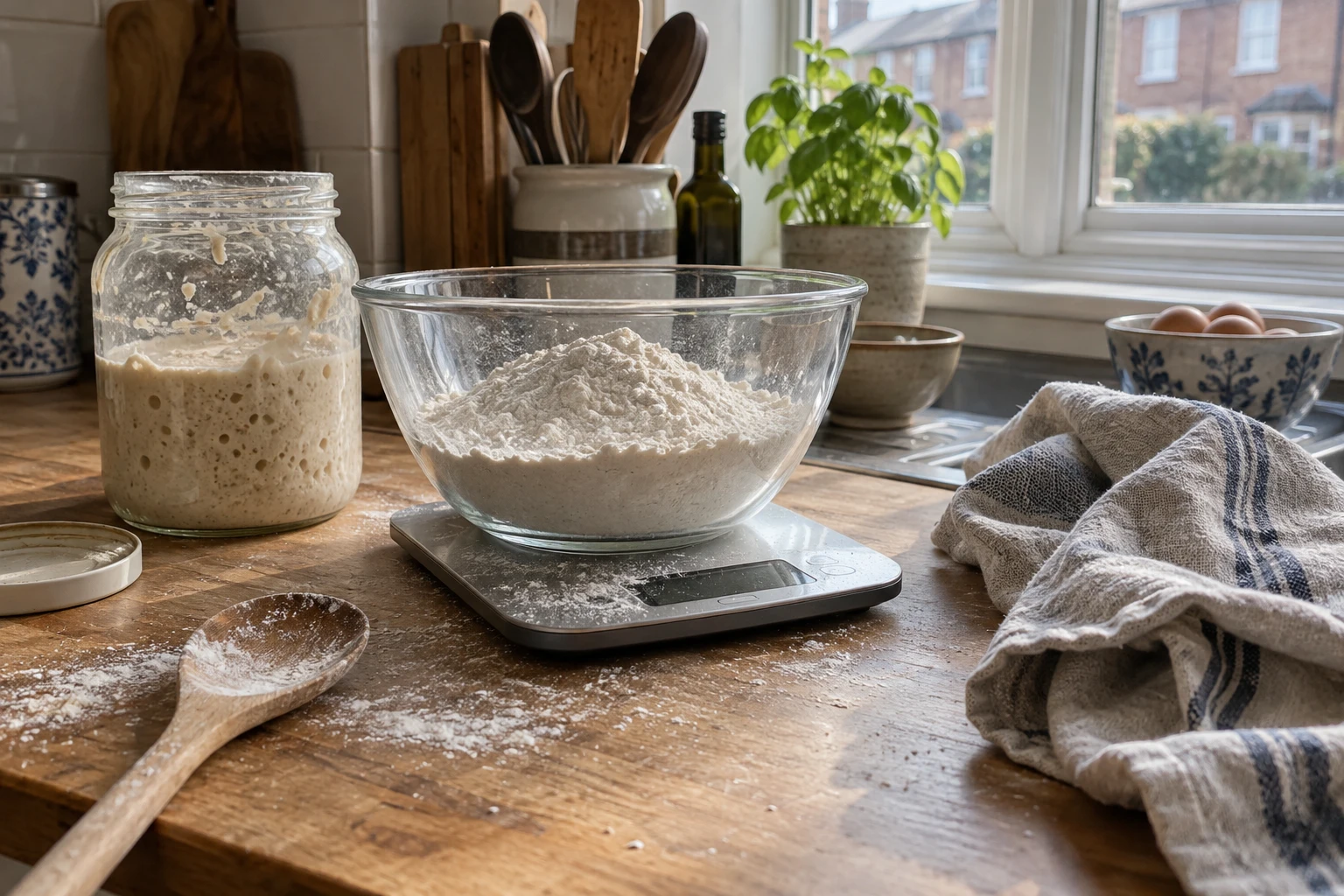
The scale has to work with the vessel you actually use. Put your mixing bowl on the counter and notice its width. A display tucked beneath an overhanging rim becomes awkward precisely when your hands are covered in dough. Capacity also includes the container, not just the ingredients.
Think about the smallest quantity you need to measure. A general kitchen scale is not automatically suitable for tiny quantities of yeast or seasoning. Read the stated increments and capacity together.
More maximum weight does not necessarily mean finer measurement.
Measure in an order you can follow
Place the scale on a firm, level surface before turning it on. Set down the empty bowl and use the zero or tare function as directed. Add the first ingredient slowly near the target, note the amount, then zero again for the next ingredient. Keep an eye on the display rather than pouring from memory.
If you overshoot, record what happened instead of pretending the formula stayed unchanged. Avoid pressing the bowl against a wall or resting a spoon partly on the counter while weighing. Clean the surface according to the instructions; flour in a button is easier to prevent than to remove.
Where the Salter Disc scale fits
Salter’s UK Disc Digital Kitchen Scale has a stated maximum capacity of 5 kg and an Add & Weigh function for adding ingredients to one bowl. Its disc platform and display layout are worth comparing with the bowl you actually use. Read the current product instructions for the exact variant before ordering.
Check readability, controls and storage as well as capacity. Someone recording a bread formula on paper may have no use for an app or another account. Choose for the functions you will use with a heavy bowl in front of you, and check batteries, care instructions and seller terms before ordering.
Make the next loaf explainable
For the next bake, aim to learn something you can repeat. Weigh the ingredients, make a short note and photograph the finished crumb beside that note. If the result changes, you now have a better starting point for the next adjustment.
Keep using an existing scale if it is readable, stable and suited to the quantities. Replace it when a specific limitation interrupts the process. The useful purchase is the one that removes uncertainty from your own bench, not the one with the longest list of features.
Questions readers ask
Does a scale fix fermentation problems?
No. It makes ingredient quantities repeatable; time, temperature and starter condition still matter.
Does capacity include the bowl?
Yes. Allow for the full weight placed on the platform.
Do I need an app?
Not for weighing a bread formula. A written record can be enough.
Sources
Checked: 2026-10-16
Advertising article. A commercial link leads to the named seller; a commission is possible only if a referral agreement covers it. The seller handles the offer.