The path gets steeper after lunch
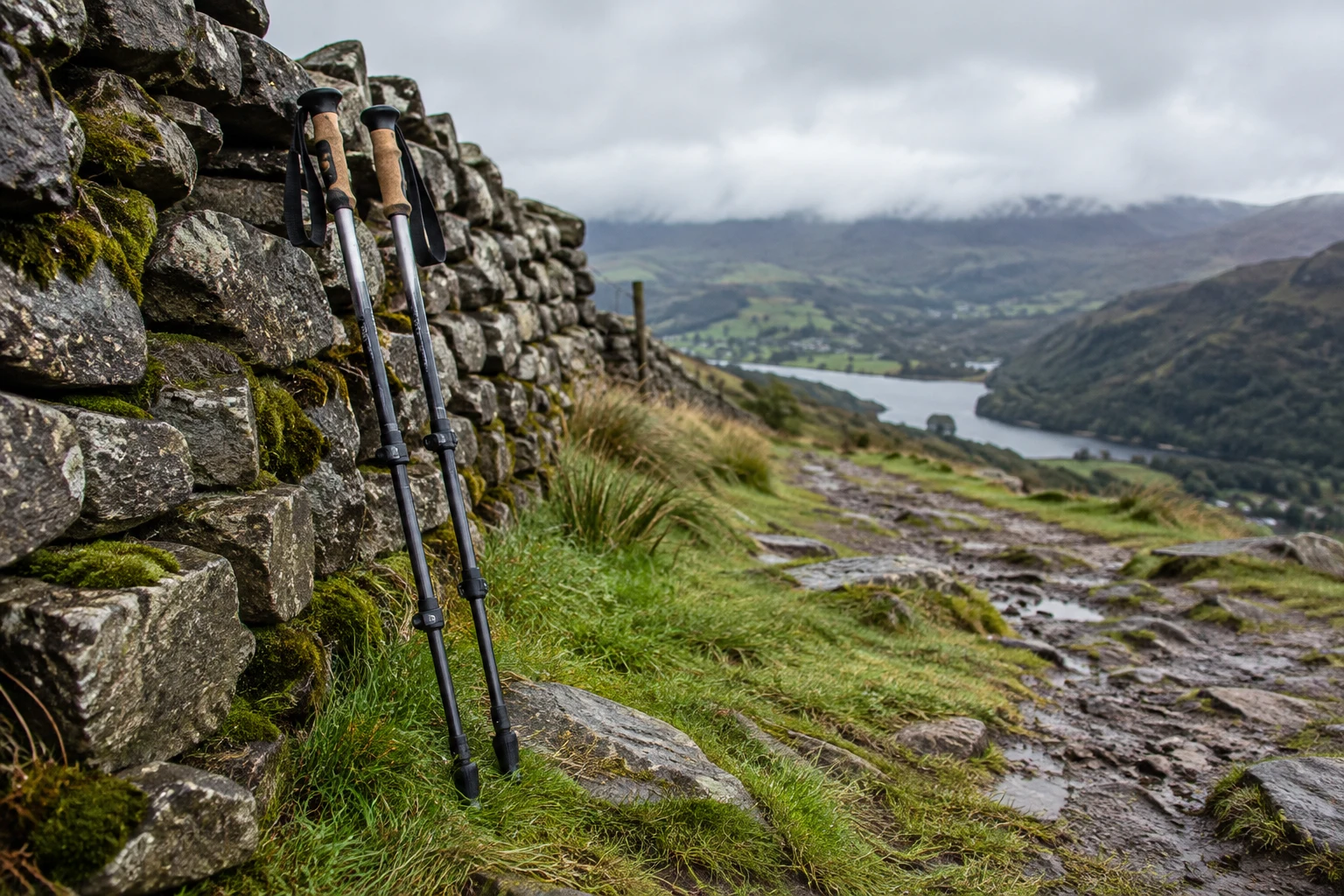
You reach the top with energy to spare. On the descent, loose stones and repeated steps ask a different question of your equipment. A walking pole that felt unnecessary on the gentle approach can become useful when you want another point of contact with the ground.
That does not make poles a substitute for suitable footwear, route planning or turning back. They add something to manage. Their value depends on whether you can place them naturally while keeping attention on the path.
A pole should not interrupt your stride
The first test is coordination rather than strength. On easy ground, try a relaxed alternating rhythm and avoid reaching far ahead. A planted tip that catches behind a stone can pull your arm out of position. Leave room for other walkers and keep exposed tips away from people when carrying the poles.
Try the straps according to the maker’s instructions, then decide whether they suit the terrain. In places where a trapped pole could be a problem, release it. There is no benefit in following a routine that makes a particular section harder to negotiate.
The lock matters more than the colour
An adjustable pole must stay at the selected length under normal use. Learn how its locking mechanism works before relying on it. Look for a clear adjustment range, a grip you can hold with the gloves you use and sections you can pack without wrestling them onto your bag.
Different tips and baskets suit different surfaces. Check what comes in the box and what costs extra. A photo showing a pair does not prove that the listed price includes two poles.
That detail is particularly easy to miss when comparing several tabs.
Practise before the long route
Set the length on level ground using the manufacturer’s guidance. Tighten and inspect the locks, make several gentle placements, then walk a short familiar route. Try packing the poles away as well as using them. If that takes too long, you may leave them extended when carrying them would be safer.
After a muddy walk, clean and dry the sections as instructed. Inspect worn tips and damaged locks before the next outing. A slipping section needs attention at home, not an improvised repair halfway down a wet hillside.
An individually sold MT500
Decathlon’s UK listing identifies the adjustable MT500 as a single pole. That makes quantity part of the buying decision. If you want a matched pair, check both the basket total and the current product details rather than assuming a set. The retailer also maintains support information for the MT500 family.
Compare the packed size with your rucksack and the grip with your hand. A useful shortlist can be very short: the right adjustment range, a dependable lock you understand and replacement parts you can identify. None of those can be judged from a colour swatch.
Keep the walk as the test
A short outing gives you more information than an ambitious first day with unfamiliar equipment. Notice whether the poles help you move calmly or make you look down at your hands. Adjust, practise and reassess.
If you seldom use them, consider whether the route or your technique explains why. Buying another model will not automatically resolve either. Choose poles for the walks you actually take, then give yourself time to learn them before a demanding descent.
Questions readers ask
Does this listing contain a pair?
Decathlon identifies the linked MT500 listing as one pole; check the current quantity.
Can poles replace sturdy footwear?
No. They are an additional aid, not a replacement for appropriate footwear or route judgement.
What should I check after a muddy walk?
Follow the cleaning guidance and inspect the locks, tips and sections for wear.
Sources
Checked: 2026-10-16
Advertising article. A commercial link leads to the named seller; a commission is possible only if a referral agreement covers it. The seller handles the offer.